
Common Air Conditioning Problems
Most AC issues show up as one of a handful of symptoms. The symptom alone rarely tells you the cause, which is why a proper diagnosis matters before parts are replaced.
- Running but not cooling: often linked to a dirty filter, a frozen evaporator coil, low refrigerant from a leak, or an outdoor unit that isn't running.
- Weak airflow at the vents: restricted filters, blower problems, closed or blocked registers, or leaking ductwork.
- The system won't turn on: thermostat settings or batteries, a tripped breaker, a blown fuse at the disconnect, or a failed control component.
- Short cycling (turning on and off rapidly): an oversized system, thermostat placement, electrical issues, or a system overheating and shutting itself off.
- Water near the indoor unit: a clogged condensate drain line, a cracked drain pan, or a failed condensate pump.
- Ice on the refrigerant lines or coil: low airflow or low refrigerant charge are the usual suspects.
- Grinding, buzzing, squealing, or clicking: worn motor bearings, a failing capacitor, loose parts, or electrical problems.
- A sudden jump in electric bills: the system may be running longer to deliver the same cooling because of dirty coils, low charge, or a component wearing out.
What an AC Repair Visit Usually Involves
A good AC repair begins with questions: when did the problem start, what does the system sound like, and has anything changed recently? From there, a technician typically checks the thermostat, the filter, the electrical connections, the indoor blower, the outdoor condenser, and the refrigerant circuit.
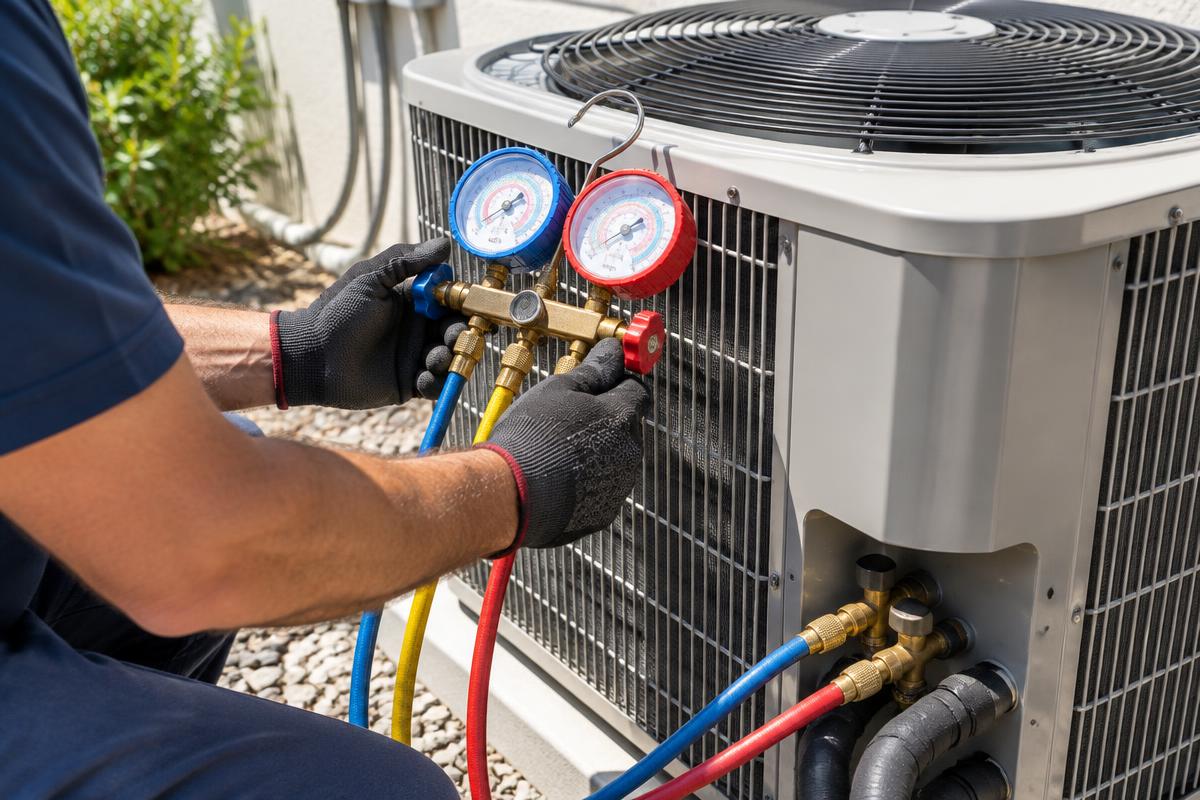
Testing components such as capacitors, contactors, and motors shows whether they are operating within spec. Temperature and pressure readings help reveal whether the system is charged correctly or has a leak. Once the cause is identified, you should get an explanation of what was found and the options available before any repair work moves forward.
Major Air Conditioning Components
Understanding the main parts of your system makes it easier to follow a technician's explanation:
- Thermostat: tells the system when to run. Wrong settings or failing batteries cause more service calls than people expect.
- Evaporator coil: the indoor coil that absorbs heat from your home's air.
- Condenser and compressor: the outdoor unit that releases heat outside. The compressor is the heart of the system.
- Capacitor and contactor: electrical parts that help motors start and run. They are common wear items in hot climates.
- Blower motor: moves air across the coil and through your ductwork.
- Condensate drain: carries the moisture removed from the air away from the indoor unit.
- Refrigerant lines: copper lines connecting the indoor and outdoor units.
AC Repair in El Paso's Desert Climate
El Paso's long, hot cooling season means air conditioners run for many hours a day across much of the year. Extended runtime puts steady wear on motors, capacitors, and contactors. Wind-blown dust can coat outdoor condenser coils and clog indoor filters faster than many people realize, reducing the system's ability to move heat.
None of this means every AC failure is caused by the weather. Age, installation quality, and how well a system has been maintained all play a part. But in a climate where your air conditioner works this hard, small issues tend to become noticeable quickly. Routine HVAC maintenance is one of the best ways to catch them early.
Repair or Replace?
Not every problem justifies a new system, and not every old system is worth repairing. A sensible decision weighs the age and overall condition of the equipment, how often it has needed repairs, the cost of the current repair compared to replacement, how well the system has been cooling, and whether the existing ductwork is in good shape.
If replacement starts to make sense, our AC installation page explains sizing and equipment considerations to help you plan.
Before You Request AC Repair
A few quick checks can save time and sometimes solve the problem outright:
- Confirm the thermostat is set to Cool and below the current room temperature, and replace its batteries if it uses them.
- Check the air filter. A heavily clogged filter can choke airflow and even freeze the coil.
- Look at your electrical panel for a tripped breaker labeled for the AC or air handler. If it trips again after being reset, leave it off and request service.
- Make sure supply vents and return grilles aren't blocked by furniture or rugs.
- If you see ice on the lines or coil, turn the system off and let it thaw before running it again.
What to Expect
- 01
Describe the problem
Share what the system is doing, when it started, and any sounds or leaks you've noticed.
- 02
Diagnosis
The system is inspected and tested to identify the underlying cause.
- 03
Explanation of options
You hear what was found and what repair or next-step options are available.
- 04
Your decision
Work proceeds only after you understand and approve the plan.