Common Heating Problems
Heating problems can be simple or serious. Here are some of the most common things homeowners notice:
- No heat at all: thermostat settings, a tripped breaker, a furnace switch that's been turned off, an ignition failure, or a safety switch that has shut the system down.
- Blowing cool or lukewarm air: ignition or flame-sensor problems in a furnace, or a heat pump that is struggling or stuck in a defrost cycle.
- Short cycling: a dirty filter causing overheating, a faulty flame sensor, or thermostat issues.
- Burning smell at first startup: often dust burning off the heat exchanger after months of inactivity. A smell that persists should be checked.
- Unusual noises: banging, rumbling, squealing, or rattling can point to ignition delays, blower problems, or loose parts.
- Uneven heating: airflow restrictions, duct issues, or a system that isn't running long enough.
Furnace vs. Heat Pump Issues
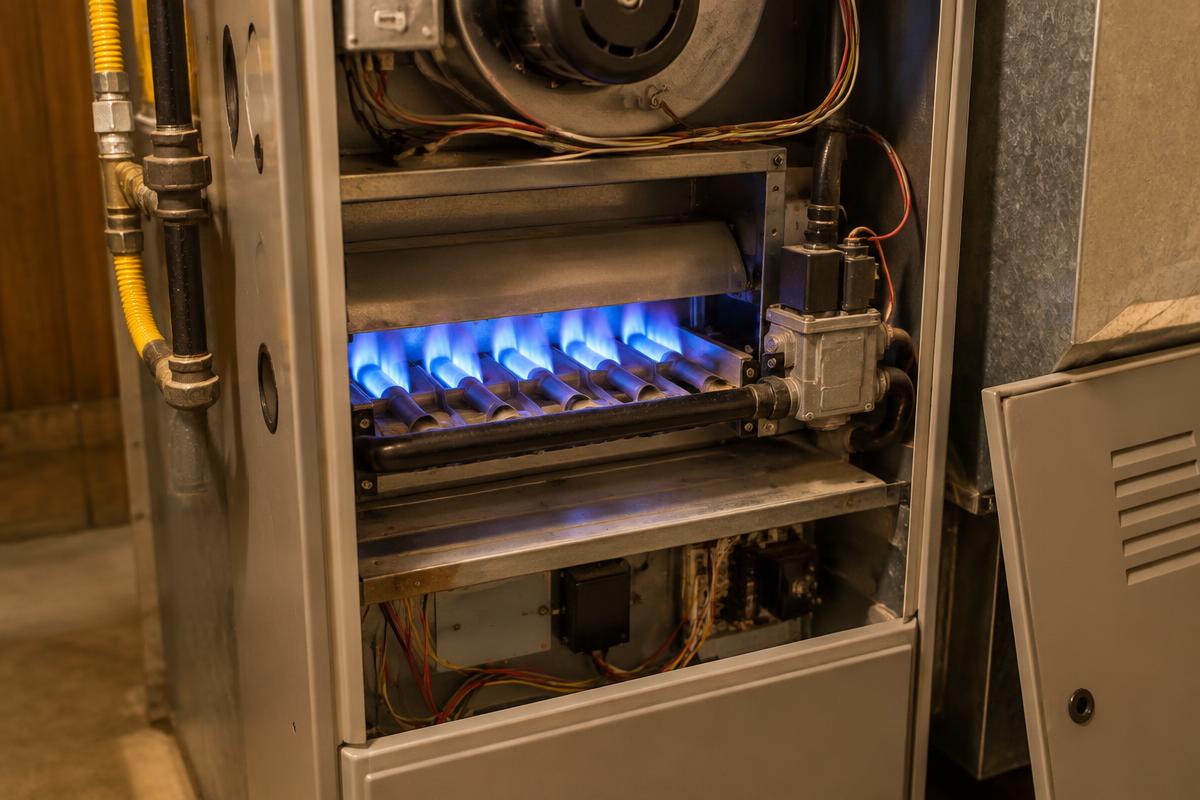
Many El Paso homes use gas furnaces, while others rely on heat pumps or electric heat. A gas furnace relies on ignition components, a flame sensor, gas valve, inducer motor, and safety switches working together. A heat pump uses the refrigerant system to move heat into the home and may use backup electric heat strips on colder days. The diagnosis and likely repairs differ depending on the type of equipment you have.
What a Heating Diagnosis Covers
A heating inspection typically starts with the thermostat and filter, then moves to the electrical supply, ignition sequence, burners or heat strips, blower operation, safety controls, venting, and airflow. The goal is to find the reason the system isn't heating properly and explain the options for addressing it.
Since heating equipment may sit unused most of the year, a check-up before winter can help identify issues before you depend on the system. Our HVAC maintenance page covers seasonal care for both heating and cooling.
Heating in El Paso
Compared with much of the country, El Paso's heating season is short, but it's real. Cold desert nights and occasional hard freezes mean a working heating system matters for comfort and, during cold snaps, for protecting your home. Dust that settles in idle equipment over the summer can also affect how a system starts up in the fall.
Furnace Tune-Ups and Heater Startups
Because El Paso furnaces sit idle for months, a tune-up before the first cold snap is one of the most useful services we offer. A furnace tune-up typically includes removing and reinstalling the blower assembly, cleaning out the burners, vacuuming the unit thoroughly, a carbon monoxide test, and a fresh filter.
A tune-up helps avoid unnecessary repair costs and reduces the risk of problems caused by neglected equipment. Ask about our current furnace tune-up special when you request service.
Simple Checks Before Requesting Service
You can safely check a few things before calling:
- Confirm the thermostat is set to Heat and above the current room temperature.
- Replace thermostat batteries if applicable.
- Check the air filter and replace it if dirty.
- Look for a tripped breaker and make sure the furnace service switch (often a light switch near the unit) is on.
- Make sure the furnace panel door is fully closed, since many units won't run if it's loose.
What to Expect
- 01
Tell us the symptoms
Describe what the heater is doing and the type of system if you know it.
- 02
Safety and diagnosis
The system is checked with attention to ignition, venting, and safety controls.
- 03
Options explained
You learn what was found and the available repair options.
- 04
Repair approval
Work moves forward after you understand and approve the plan.