
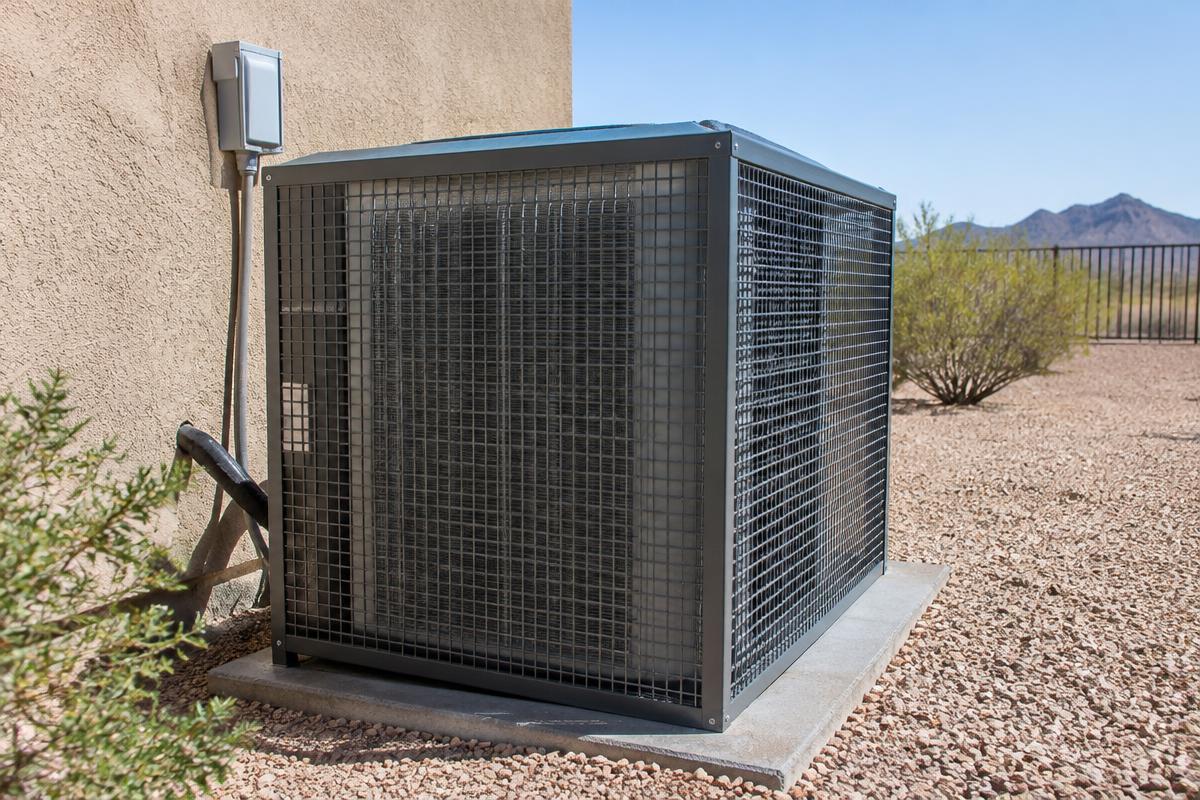
How Hail Damages an Outdoor Unit
The condenser coil is built from thin aluminum fins wrapped around refrigerant tubing — thin enough to bend under a fingertip, and no match for hail. When hailstones strike the coil face, fins fold and mat together. Blocked fins mean the fan can't pull air through the coil, and a condenser that can't move air can't release heat.
The consequences build gradually. Restricted airflow raises operating pressures, forces longer runtimes, and pushes the compressor harder in already brutal summer heat. In severe cases the damage contributes to compressor failure — an expensive component to replace — years before the equipment should have reached the end of its life.
What Hail Guards Are
A hail guard is a protective barrier installed in front of — or surrounding — the condenser coil, built from sturdy material that takes the hailstone's impact so the coil doesn't. Designs vary: some are frames with engineered mesh or louvered panels sized to the unit, and commercial rooftop installations often use larger protective assemblies.
A guard is not a cage to keep people out or a winter cover. Its job is specifically to stop hail impact during storms while staying on the unit year-round.
Protection vs. Airflow: The Critical Balance
The whole point of a condenser is moving air through the coil. Any guard that blocks too much of the coil face trades hail protection for the same airflow restriction hail causes — just slower. Manufacturers specify required clearances and airflow for their equipment, and a guard that ignores those requirements can raise operating pressures and reduce efficiency even on a clear day.
That's the selection principle: choose a guard that stops hailstones while preserving the manufacturer-required airflow. Guard design, material, and open area all matter, and the guard should be matched to the specific equipment rather than bought generically. A guard that suffocates the coil protects you from hail and quietly sabotages the system anyway.
Choosing the Right Guard
A few practical selection factors:
- Airflow: the guard's open area should preserve the equipment's required airflow with margin to spare.
- Fit: a guard sized to the actual unit covers the coil face properly instead of leaving gaps.
- Material and finish: corrosion-resistant construction that survives West Texas sun for years.
- Service access: the guard should let technicians reach the unit for normal maintenance without a teardown.
- Manufacturer guidance: equipment warranties and specs matter; the installation shouldn't conflict with either.
Commercial and Rooftop Applications
Rooftop packaged units — common on El Paso commercial buildings — are even more exposed than residential condensers, with no walls or fencing to break the wind that carries hail sideways across a flat roof. Coil protection on rooftop units is a straightforward investment against downtime: a damaged RTU coil in August means an uncomfortable building and an emergency repair.
Our commercial HVAC team can evaluate rooftop equipment for hail protection, and guard checks can be folded into a preventive maintenance schedule so the protection itself stays in good condition.
Keeping Expectations Realistic
Hail guards meaningfully reduce the risk of coil damage in hailstorms, and that protection can help equipment reach its expected service life instead of being cut short. What a guard can't do is guarantee total protection from every storm, or extend equipment life beyond what good maintenance provides. Severe weather can still find a way, and aging equipment ages regardless.
Think of a hail guard as one layer of protection on a valuable piece of equipment — worthwhile insurance for an exposed outdoor unit, not a force field. After any significant hailstorm, it's worth having the unit and its guard inspected.
What to Expect
- 01
Equipment assessment
The condenser is inspected, including any existing hail damage, and guard options are discussed.
- 02
Selection
A guard is chosen to fit the unit while preserving manufacturer-required airflow.
- 03
Installation
The guard is securely mounted with service access and clearances maintained.
- 04
Airflow verification
Operation is checked to confirm the installation doesn't restrict the system.