Why a Tune-Up Matters for El Paso Furnaces
Furnaces in our climate sit dormant for eight or nine months of the year. During that time, dust settles on burners and blower parts, panels get bumped, and small mechanical changes go unnoticed because nobody is running the system. The first startup of the season often reveals the dusty smell of a neglected furnace — and sometimes problems that were quietly developing.
A tune-up before the heating season addresses that idle-season buildup on a schedule, instead of on the coldest night of the year when a failure is most inconvenient.
What a Furnace Tune-Up Commonly Includes
Tune-up checklists vary by equipment and condition, so treat this as the typical scope rather than a fixed promise. A thorough furnace tune-up generally covers items such as:
- Removing, cleaning, and reinstalling the blower assembly.
- Cleaning the burners and checking their ignition and flame pattern.
- Vacuuming dust and debris from the furnace cabinet and around the unit.
- Checking the heat exchanger, venting, and safety controls.
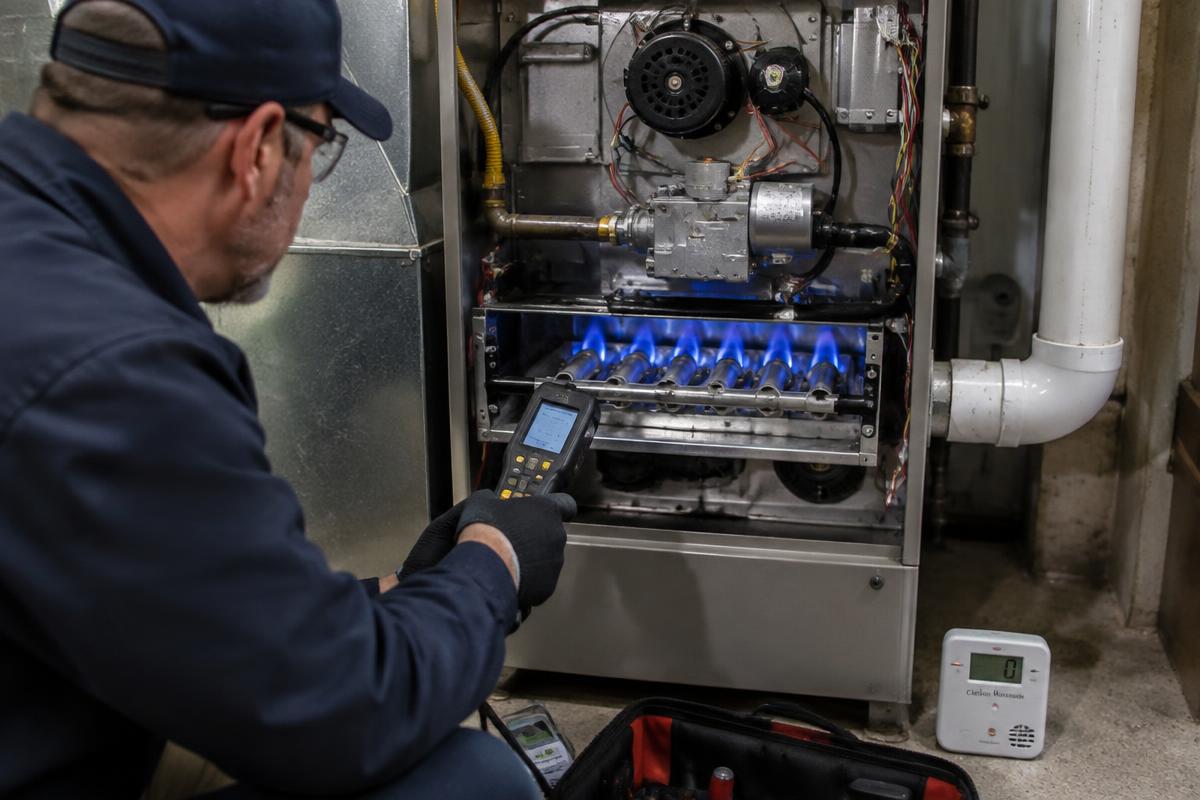
- Testing for carbon monoxide to verify safe operation.
- Checking electrical connections and motor operation.
- Replacing the air filter.
The Exact Checklist for Your Visit
The specific work performed during your tune-up depends on your furnace's type, age, and condition, and is confirmed when you request service. Anything beyond routine cleaning and inspection that the system needs will be explained with options before work moves forward — a tune-up is the starting point for knowing the furnace's actual condition, not a blank check.
Carbon Monoxide Testing and Safety
A gas furnace burns fuel and produces combustion gases that must exit the home through the heat exchanger and vent. A cracked heat exchanger or blocked vent can let carbon monoxide — an odorless, colorless gas — into living space. That's why CO testing is part of a serious tune-up: it verifies that combustion is healthy and that the exhaust path is doing its job.
Safety controls get checked too. Limit switches that shut the furnace off if it overheats, and flame-sensing components that confirm gas is only flowing when it should burn, are what make a furnace safe to leave running unattended.
Heater Startups for the Season
A heater startup is the first-run service that gets a system ready for the season — verifying ignition, airflow, and safety operation before you rely on it. For systems that also cool, this pairs naturally with springtime cooling maintenance. If your furnace hasn't run in months and you'd rather not discover problems by trial, mention a heater startup when you request service.
When to Schedule
Fall is the natural window — after summer's dust has settled in and before the first freeze. Scheduling early in the season means the furnace is ready when the cold arrives, and it avoids the late-fall rush when everyone who woke up cold on the same night is calling at once.
If your furnace is already showing symptoms — short cycling, lukewarm air, unusual smells or sounds — a heating repair visit makes more sense than a routine tune-up, and the diagnosis will tell you which you need.
What to Expect
- 01
Schedule in fall
Request a tune-up before the heating season, or a startup check before first use.
- 02
Cleaning and inspection
The blower, burners, cabinet, venting, and safety controls are cleaned and checked.
- 03
Safety verification
Carbon monoxide levels and safety controls are tested to confirm safe operation.
- 04
Findings reviewed
You get a summary of the furnace's condition and anything worth planning for.