
How Commercial HVAC Differs From Residential
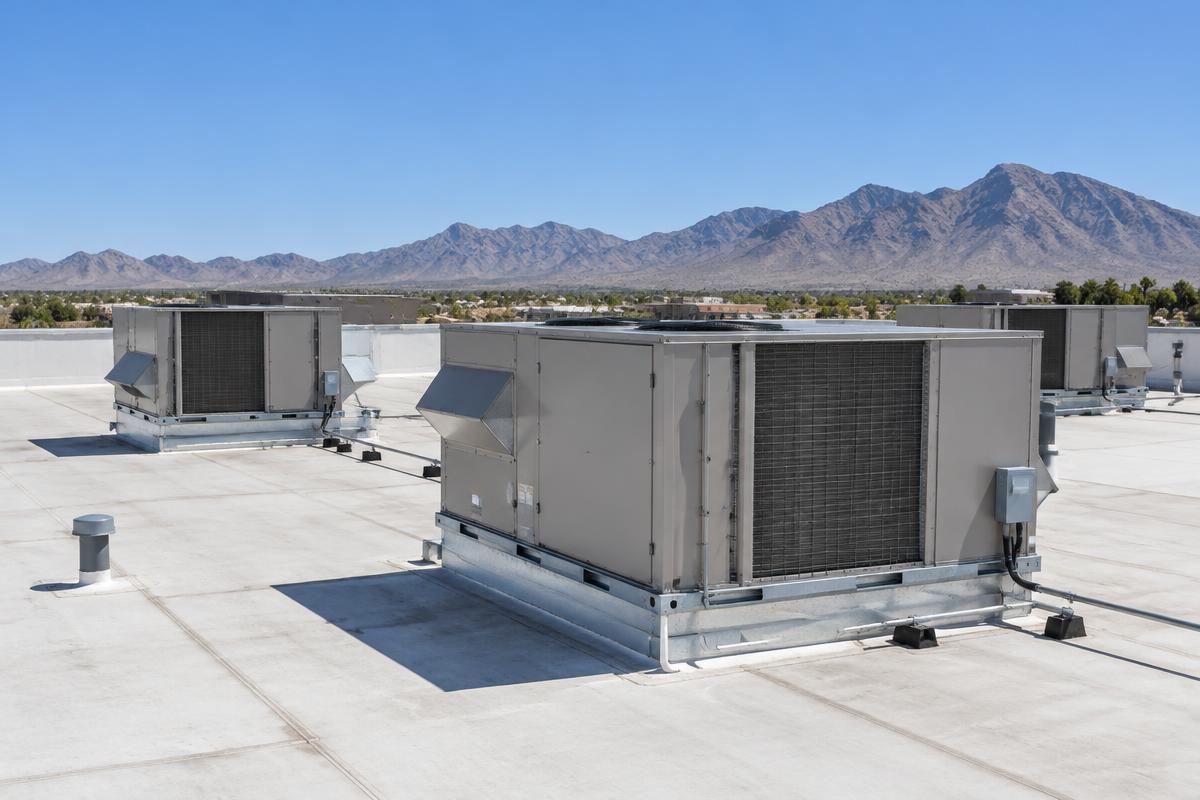
Commercial properties often use rooftop packaged units, multiple zones, larger tonnage equipment, and more complex controls. Occupancy levels change throughout the day, kitchens or equipment may add heat, and ventilation requirements can be stricter. Access is different too: rooftop equipment, ceiling spaces, and coordination with tenants or business hours all shape how service is planned.
Common Commercial HVAC Concerns
- Rooftop units not cooling or heating properly.
- Uneven temperatures between offices, sales floors, or zones.
- Thermostat and control problems across multiple systems.
- Rising energy costs from aging or poorly maintained equipment.
- Condensate drain issues causing ceiling stains or leaks.
- Poor ventilation or stuffy spaces.
- Equipment nearing the end of its service life.
Preventive Maintenance for Businesses
Scheduled maintenance is often the most cost-effective approach for commercial systems. Regular filter changes, coil cleaning, belt inspection, electrical checks, and control testing help reduce unexpected shutdowns. In El Paso, rooftop units are exposed to intense sun and dust, making coil and filter care especially important.
Many of the same principles from our HVAC maintenance page apply, scaled to multiple units and business schedules.
Planning Repairs and Replacements
Commercial equipment decisions should consider total operating costs, the remaining life of existing units, business disruption during work, and future space needs. Planning a replacement before a failure gives you more control over timing and budget than an emergency change-out.
Types of Properties
Commercial HVAC needs vary between offices, retail stores, restaurants, warehouses, medical offices, and multi-tenant buildings. The specific types of commercial properties and equipment YOUR HVAC CO services are being confirmed. Use the request form to describe your property and system, and we'll follow up to discuss whether we're the right fit.
What to Expect
- 01
Describe your property
Share the property type, number of units, and the issue.
- 02
Site assessment
Equipment and conditions are evaluated with your schedule in mind.
- 03
Recommendations
Findings and options are explained, including timing considerations.
- 04
Coordinated service
Work is planned to reduce disruption to your business.