
Why Lint Buildup Is a Problem
The lint screen catches most, but not all, of the fibers a load of laundry sheds. Fine lint passes through and settles along the vent duct, especially at elbows and in any sagging sections. Each cycle adds a little more, and the buildup gradually narrows the duct.
As the passage narrows, the dryer has to run longer to push moisture out. Longer runtimes mean higher energy use, more wear on the dryer's motor and heating element, and clothes that come out still damp. In severe cases, the dryer overheats and its high-limit safety shuts it down mid-cycle.
Signs Your Dryer Vent Needs Cleaning
Any of these signs points to restricted exhaust airflow:
- Loads that used to take one cycle now need two or more.
- Clothes or the top of the dryer feel unusually hot after a cycle.
- Little or no airflow at the outside vent hood while the dryer runs.
- A musty or burning smell during operation.
- Lint visible around the dryer's rear connection or at the exterior hood.
- The dryer shuts off before the load is dry, then restarts fine later.
Fire Safety Considerations
Dryer lint is highly combustible, and dryers produce heat. Safety agencies identify failure to clean dryer vents as a leading factor in home laundry fires. Cleaning the vent line removes the fuel and the restriction that lets heat build up.
It's important to keep the claim honest: professional cleaning significantly reduces a known risk factor, but no cleaning can promise a home will never experience a dryer fire. Good habits matter alongside it — clean the lint screen before every load, never run the dryer when you're away from home or asleep, and follow the manufacturer's guidance.
How Professional Cleaning Works
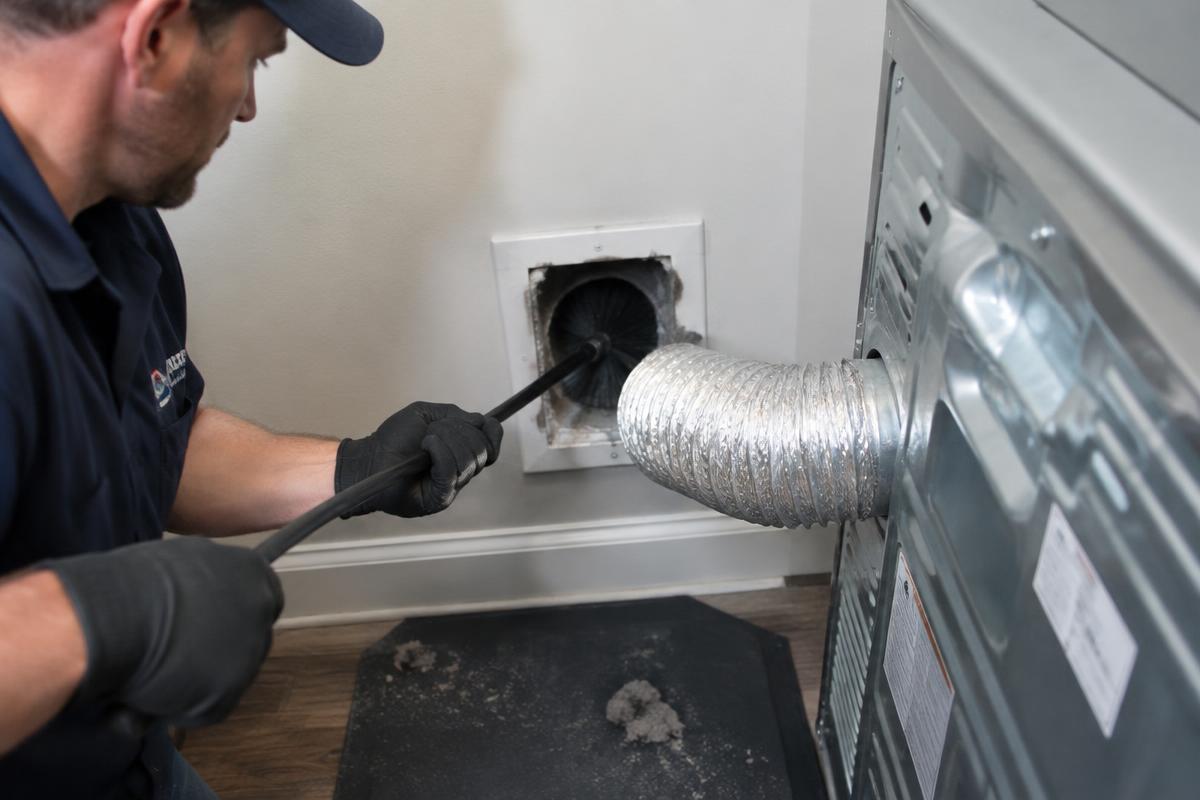
A professional cleaning addresses the whole exhaust path, not just the section behind the dryer. The dryer is moved and disconnected safely, the vent line is brushed with rotary tools that reach the full length of the run, loosened lint is vacuumed out rather than blown deeper, and the exterior hood is checked to confirm its damper opens freely and its screen isn't clogged.
The connection between the dryer and the wall — often the most clogged section — is cleaned and reconnected with the duct secured properly. Flexible plastic or foil transition ducts, which are prone to trapping lint and are not rated for permanent use, are typically flagged for replacement with rigid or listed semi-rigid metal duct.
Dryer Exhaust Duct Configuration
How a vent is routed matters as much as how clean it is. Long runs, multiple sharp elbows, and crushed or sagging sections all restrict airflow — and a vent that fights the dryer collects lint faster. Building codes generally favor short runs with smooth-wall rigid metal duct, minimal elbows, and terminations through an exterior hood with a working damper.
During a cleaning we can point out configuration problems we encounter: a run that's longer than it looks, an elbow count that chokes airflow, or transition duct that should be upgraded. Those notes help you plan a repair or reroute if the vent's design is working against you.
How Often to Schedule Cleaning
Frequency depends on the length of the vent run, how many loads you dry, whether you have pets, and the duct's configuration. A household that dries several loads a week often benefits from an annual cleaning; long or twisty runs and large families may need it more often. A good rhythm: notice whether one-cycle drying is still the norm. The moment it starts slipping, the vent is loading up.
Vent cleaning pairs naturally with other seasonal home maintenance — many clients schedule it alongside an HVAC maintenance visit so one appointment covers both.
What to Expect
- 01
Describe the symptoms
Tell us whether drying times have lengthened and where the dryer vents to the outside.
- 02
Inspection
The full exhaust path is checked, from the dryer connection to the exterior hood.
- 03
Cleaning
The vent line is brushed and vacuumed clear, and the exterior hood is cleaned and tested.
- 04
Findings and tips
You hear what was found, including any duct configuration issues worth addressing.