
What Is Air Duct Cleaning?
HVAC supply ducts carry heated or cooled air from the equipment to occupied spaces. Return ducts bring air back to the system. Dust and debris can collect along accessible surfaces, near connections and in sections that are difficult to see from a room’s grille.
Professional duct cleaning addresses accumulated material in an existing air-distribution system. Inspection comes first: duct material, condition, accessibility and the type of debris determine whether cleaning is appropriate. Not every system needs cleaning, and a little settled dust is not proof of a problem. Routine cleaning is not a guarantee of better health or less household dust.
Signs Your Ductwork May Need Inspection
Symptoms are reasons to investigate, not a diagnosis. Dust at a grille may come from the room itself; weak airflow can have causes unrelated to dirt inside ducts. Explain what you see and when it started.
- Visible debris near accessible vents or dust accumulation inside ductwork.
- Evidence of pests or suspected contamination that needs professional investigation.
- Debris following construction or renovation activities near HVAC openings.
- Suspected airflow restrictions, which can also involve filters, damaged ducts or blower problems.
- Unusual odors requiring investigation rather than assumptions about their source.
How Professional Duct Cleaning Works
A general approach starts by reviewing the duct system and identifying the sections that may need attention. Suitable access points allow equipment to reach those areas without unnecessarily disturbing surrounding materials. A technician considers duct lining, flexible sections and existing damage before choosing a cleaning method.
Appropriate equipment is used to loosen and remove accessible debris as the procedure permits, followed by inspection of serviced areas and a discussion of observations or follow-up work. The exact method and reachable sections vary by property; these are planning principles, not a promise that every step applies to every visit.
The East El Paso photographs show an orange rotary brush, its drive rod and a corrugated hose inside ductwork. They illustrate equipment present during that job, not a specification for every service. Ask how debris will be collected and what sections can be reached before approving your scope.
A Look Inside a Recent Duct Cleaning Job
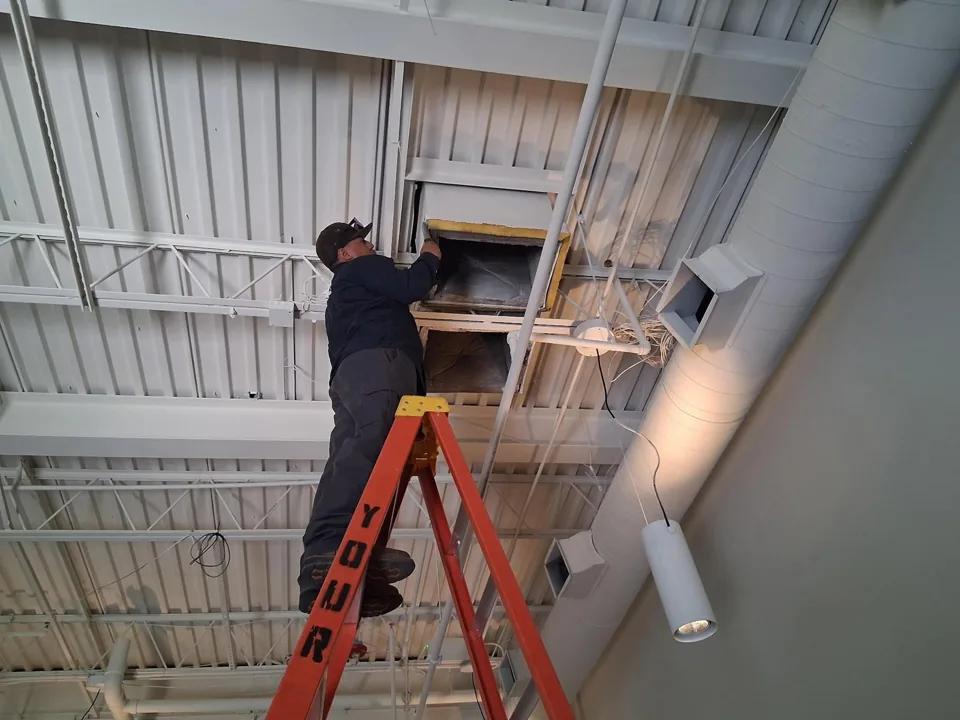
Air Duct Cleaning Project in East El Paso, TX: Jimmy Gonzalez confirmed this completed YOUR HVAC CO project took place in East El Paso, Texas. The authentic photographs show a worker accessing overhead ductwork, interior surfaces, cleaning equipment and flexible duct connections.
These are views of the work, not a labeled before-and-after sequence or a measurement of air quality. View the full project gallery for the owner-supplied photographs.
Air Duct Cleaning Project in East El Paso, TX
Accessing the duct system
Inspecting duct interiors
Cleaning equipment and duct interiors
Duct connections
Residential and Commercial Ductwork: Access Matters
Duct systems differ in size, ceiling layout and mechanical complexity. A system above a suspended ceiling has different access needs from ducts behind finished surfaces. Multiple branches, overhead equipment and insulated connections can affect preparation and the areas that can be serviced.
Scheduling also depends on property access and how the space is used. The East El Paso photos show overhead ductwork, but the building type is not confirmed. Residential and commercial duct-cleaning scope should be discussed directly with YOUR HVAC CO; neither category is advertised here as a separately verified offering.
Air Duct Cleaning vs. Dryer Vent Cleaning
HVAC duct cleaning focuses on the supply and return air-distribution system. A clothes dryer has a separate exhaust path that carries warm, moist air and lint outside. The purpose, materials and cleaning needs are different; one service does not automatically include the other.
For slow drying or suspected lint buildup in the dryer exhaust, see dryer vent cleaning. Tell us which system concerns you so the request reaches the right service discussion.
Air Duct Cleaning vs. Duct Fabrication
Cleaning deals with accumulated debris in existing ducts. Fabrication involves making, modifying or fitting duct components, such as transitions or sections needed for a change in equipment or layout. Cleaning cannot correct undersized ducts, crushed flexible runs or missing connections.
If the issue is duct shape, damage or airflow design, explore custom duct fabrication. An inspection helps distinguish debris that can be removed from a physical problem that needs repair or modification.
Ductwork and El Paso’s Desert Environment
Windblown desert dust can enter through building openings and collect on filters or equipment. That does not automatically mean the entire duct system needs cleaning. Start with filter condition, suitable filter selection and replacement according to equipment guidance, and the sources of dust entering the space.
A filter that is too restrictive can affect airflow, while poorly fitted filters may let particles bypass them. HVAC maintenance and an inspection of accessible ducts can help separate equipment care from a cleaning need. Addressing the source matters: duct cleaning alone does not stop dust from entering later.
Discuss Your Location and Duct System
YOUR HVAC CO’s confirmed coverage includes El Paso, East El Paso and the Lower Valley, plus Socorro and Horizon City. Our documented duct-cleaning project was completed in East El Paso; its exact ZIP code and customer address are not published.
See service areas and provide your location, duct concerns and access details. For a Far East El Paso duct-cleaning request, confirm location-specific availability and the applicable service scope when contacting us.
Planning Your Duct-Cleaning Service
- 01
Describe the concern
Share visible debris, symptoms, location and known access details.
- 02
Review condition and access
Discuss duct materials and which sections may require inspection or cleaning.
- 03
Agree on the procedure
Confirm appropriate equipment, reachable areas and the proposed scope.
- 04
Review observations
Discuss serviced areas and any recommended follow-up work.