Furnace Replacement Services in El Paso
An aging or failing furnace can make heating unpredictable, but replacement should solve an identified need. Frequent failures, an expensive major repair, poor performance or a significant safety finding may justify reviewing replacement options.
A change-out replaces existing furnace equipment. The work needs to account for the building, the heating and cooling configuration, access, connections and the condition of the air-delivery system. Confirm the proposed equipment and installation scope before scheduling removal.
Signs It May Be Time to Replace Your Furnace
Evaluate these signs together with professional findings rather than using a calendar age as the only deciding factor.
- Frequent breakdowns that keep interrupting heating.
- Increasing repair costs or a major repair on equipment with other problems.
- Poor heating performance or recurring comfort problems after faults are addressed.
- Equipment condition that makes dependable operation difficult.
- Safety concerns identified by a qualified assessment.
- Equipment age considered alongside condition, service history and the availability of a suitable repair.
What Is a Furnace Change-Out?
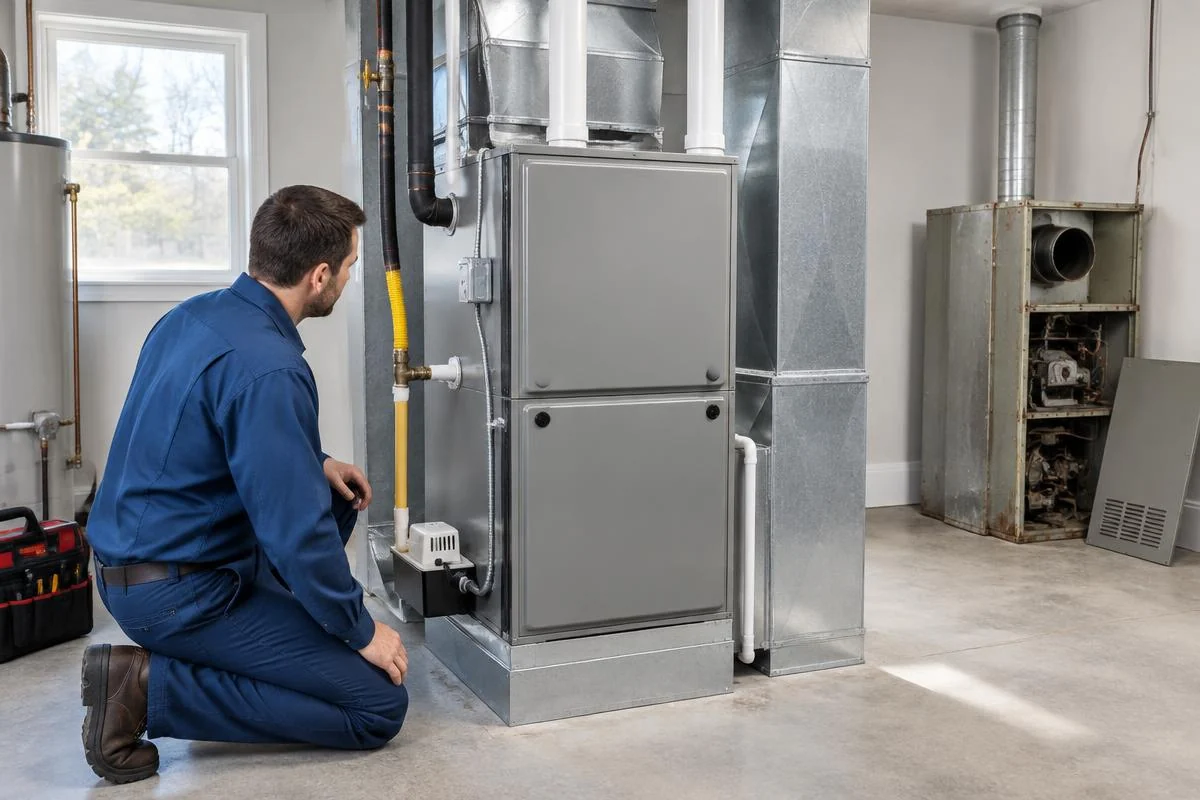
A furnace change-out generally means removing the existing furnace and installing a suitable replacement in the heating system. It is different from adding heat where none existed, though either project needs building-specific planning.
Even when the new unit fits in the same space, cabinet dimensions, airflow, controls and venting requirements may differ. Existing duct transitions or connections may need adaptation. Removal, handling and installation details should be part of the agreed proposal rather than assumed to be identical for every property.
Choosing the Right Replacement Furnace
Heating capacity should reflect the building’s needs, not simply duplicate the old unit’s rating. Insulation, windows, air leakage, layout and existing comfort problems can change what capacity is appropriate. Oversizing can produce short cycles; too little capacity can leave the system struggling.
Energy efficiency is one selection factor, but installation compatibility matters just as much. Review equipment configuration, supply and return ducts, electrical needs, thermostat compatibility and venting and combustion requirements. Higher-efficiency equipment may require different venting or condensate arrangements.
Ductwork that restricts airflow can undermine a new furnace. Our custom duct fabrication page explains fitted transitions and duct improvements. Equipment types and availability should be confirmed during your replacement discussion; no brand relationship or performance guarantee is implied.
Furnace Repair or Replacement?
An isolated fault may be repairable without changing the whole furnace. Repeated repairs, a serious equipment concern or poor performance that persists after airflow and control issues are addressed can shift the balance toward replacement.
Our heating repair page covers diagnosis. Compare the repair scope and cost with a replacement plan, including any needed installation changes. A replacement should not be used to avoid diagnosing a ductwork problem, and equipment age alone is not a reason to discard a functioning system.
How Much Does Furnace Replacement Cost in El Paso?
There is no reliable one-price answer without seeing the equipment and installation requirements. A discussion should separate the replacement furnace from any work needed to make it suitable for the building.
- Equipment type, heating capacity, efficiency and configuration.
- Installation access and the complexity of removal and handling.
- Existing ductwork, transitions and return-air requirements.
- Electrical connections and control compatibility.
- Venting and combustion requirements, and any related installation changes.
- Applicable code and permit considerations for the agreed work.
Planning a Furnace Change-Out Around Your Property
Share whether the building is a home or business, where the furnace is located, what it connects to and which rooms are uncomfortable. Photos and equipment details can support the initial discussion, but do not replace an assessment.
Discuss scheduling and the expected interruption to heating before work starts. Duration depends on access, equipment availability and scope; a fixed same-day completion or emergency availability is not promised. For business properties, include access restrictions and occupancy needs.
Heating Services in El Paso and Surrounding Communities
YOUR HVAC CO serves El Paso, including the Lower Valley (79907), East El Paso (79936) and the Far East El Paso target area (79938). Long cooling seasons can leave furnace problems unnoticed until colder nights arrive; dust, return-air restrictions and the condition of existing ductwork all deserve attention before relying on the heat.
We also serve Socorro and Horizon City. Older valley homes may need airflow reviewed around additions, while growing east-side neighborhoods can benefit from checking whether equipment and ducts match the building. See our service areas, and share your address and equipment details to confirm scheduling.
Request Furnace Replacement Service in El Paso
Use our existing service request form to discuss a furnace replacement or change-out. Include your location, equipment type if known, recurring problems and any previous repair findings. YOUR HVAC CO will follow up to discuss next steps.
For equipment that still works but needs seasonal attention, see furnace tune-ups. For a CO alarm or suspected leak, leave immediately and contact emergency responders rather than submitting a routine request.
Furnace Replacement Process
- 01
Evaluate the existing system
Review equipment condition, current performance and the reason replacement is being considered.
- 02
Review heating requirements
Consider the building’s heating needs, airflow and installation configuration.
- 03
Discuss replacement options
Review suitable equipment and agree on the proposed scope.
- 04
Plan removal and installation
Coordinate access, handling and scheduling for removal and replacement.
- 05
Review connections and requirements
Address applicable duct, electrical, venting and code requirements for the agreed installation.
- 06
Check operation and safety
Plan equipment-specific operating and safety checks appropriate to the installation.
- 07
Review controls and maintenance
Discuss how to operate the system and care for it according to manufacturer guidance.